A Lineage of
Teachers, Builders,
& Engineers
01 — My Grandparents
The People Who Built the Foundation
I come from a family where making things wasn't a hobby—it was normal.
Both of my grandfathers served in the military and went on to technical manufacturing careers that shaped how I think about work, responsibility, and precision.
On my mother's side, my grandfather began his technical career in the U.S. Army's Signal Service during the Korean War era, stationed in Japan and working on wireless communications systems. After his service, he entered the Pontiac Motor Division and built a decades-long career in manufacturing engineering and tooling.
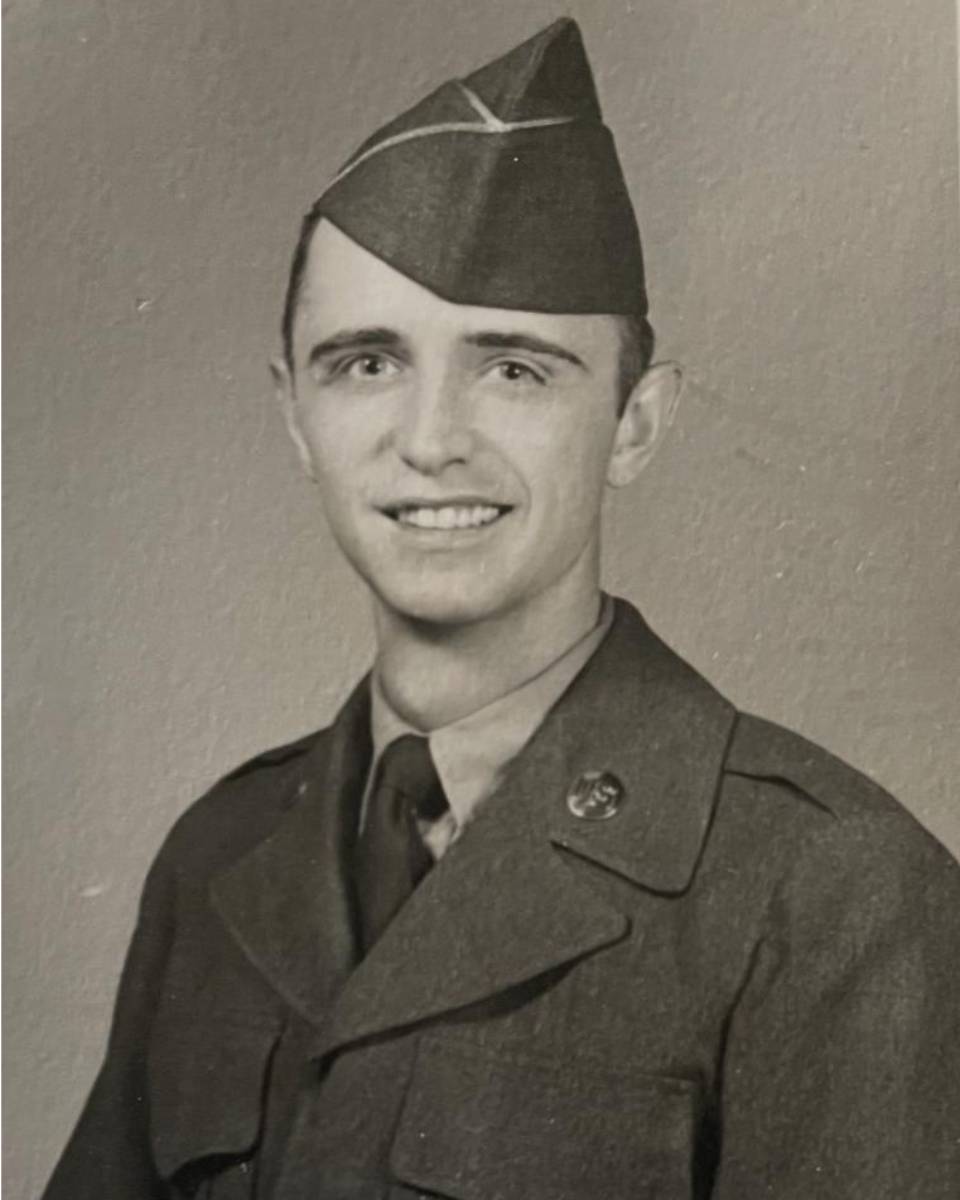
U.S. Army · Corporal
Far East Command (Signal Service)
Korean War Era
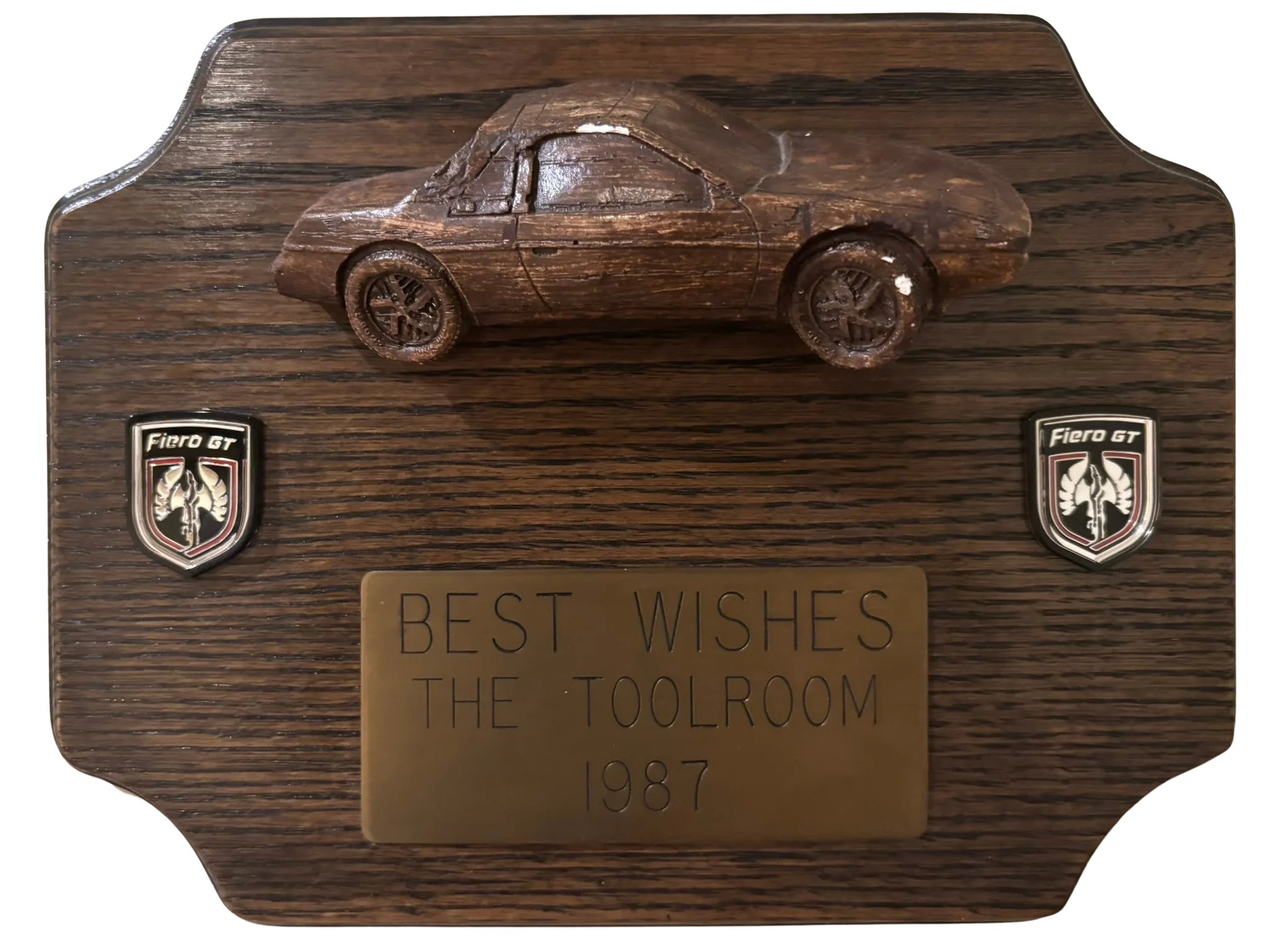
Toolroom Tribute Plaque — 1987
Given by the craftsmen and engineers he led, before promotion to Plant 37 Superintendent
U.S. Army · Corporal
Far East Command (Signal Service)
Korean War Era
Toolroom Tribute Plaque — 1987
Given by the craftsmen and engineers he led, before promotion to Plant 37 Superintendent
Rising from die design into superintendent-level plant leadership, he ultimately directed tooling, maintenance, and plant engineering operations at Plant 37 during the Fiero era—overseeing die rooms, machine repair, and the production-critical infrastructure that sustained high-volume vehicle assembly.
His authority extended beyond systems and equipment to people. Among the engineers who advanced under his leadership was a young co-op student named Mary Barra. He promoted her into a superintendent-level role at a time when such decisions were uncommon, reportedly facing resistance for doing so. His standard was technical competence and character, not convention. Leadership, to him, meant recognizing capability early—and standing behind it.
He was the kind of person whose standards were built into his environment. In his basement, every tool was outlined on a board so its absence was immediately visible. He was disciplined, ordered, and deeply capable, yet never once felt the need to advertise it. He taught through clarity and example, whether on the factory floor, the golf course, or at home. Excellence, to him, was quiet and expected.
My grandmother, a graduate of Pontiac High School, attended Michigan State College (pre-MSU) at a time when few women did. She became an elementary education teacher, but her most enduring classroom was her own home, raising five children as a team, not just individuals. That lineage of teaching continued through her daughter and now through my cousin—three generations shaped by her example.
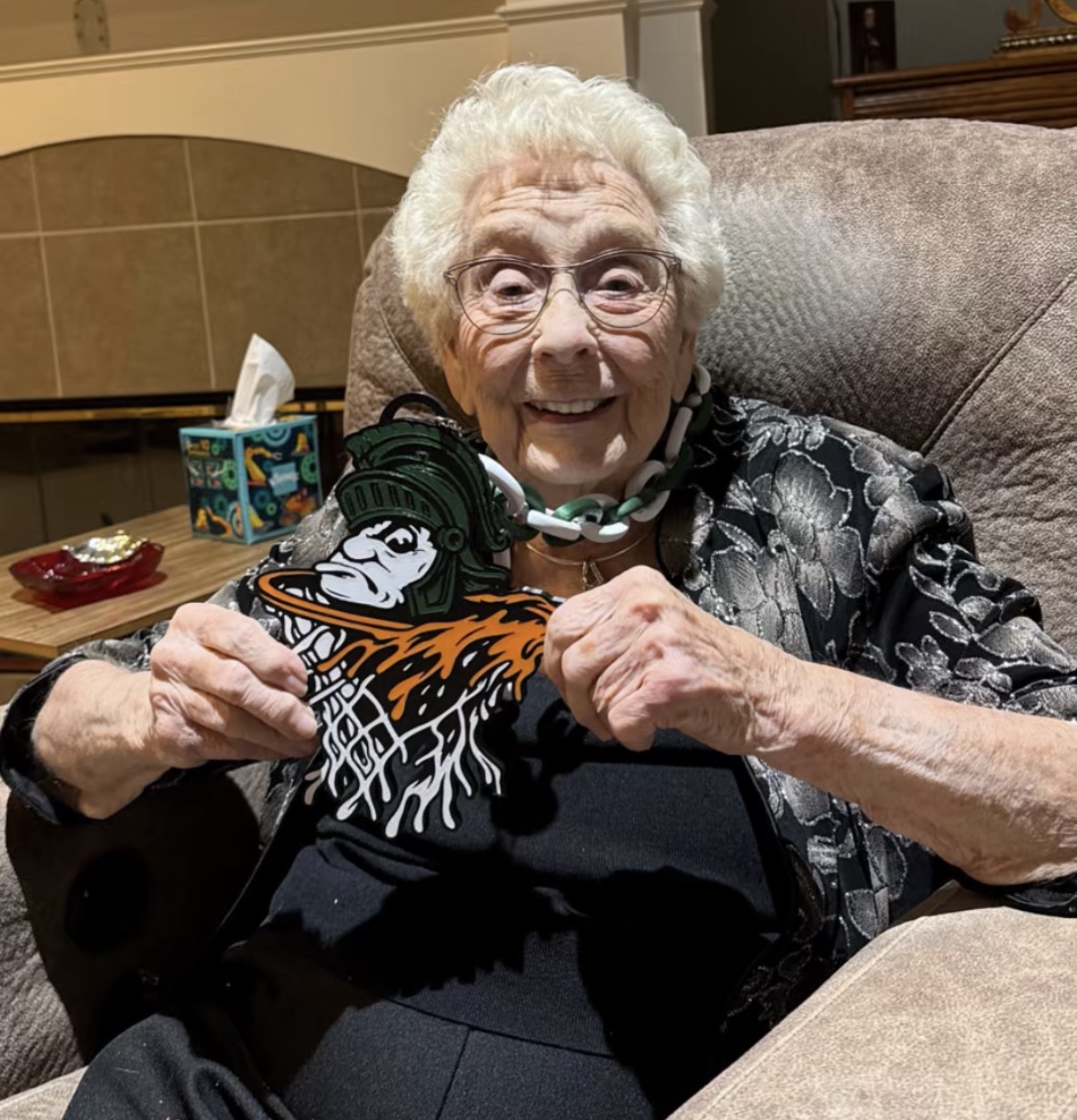
Michigan State Spartan · Age 92
With 3D Printed Oversized Sparty Chain
Where my grandfather built systems in manufacturing plants, she built them at home—structures of tradition, expectation, and belonging that held a growing family together across decades. At 92, she still bleeds green and white. Christmas gathers more than 40 of us under her roof each year. Her love for Michigan State basketball became a family institution—every March, we run "Grandma's Bracket Madness," a tournament born from her lifelong devotion to Spartan hoops.
On my father's side, my grandfather served as an expert marksman in the U.S. Marines before working at NASA's Michoud Assembly Facility during the Apollo era. He earned recognition for his contributions to helping build Saturn V—the rocket that first carried men to the moon.
His patriotism wasn't loud or performative. It showed up in his pride in American manufacturing and engineering, and his belief that difficult, consequential work was worth doing well.
He was deeply technical, building analog televisions and digital electronics long before it was common. His basement was filled with oscilloscopes, components, and analog meters of every kind—tools meant to measure, verify, and understand, not guess.
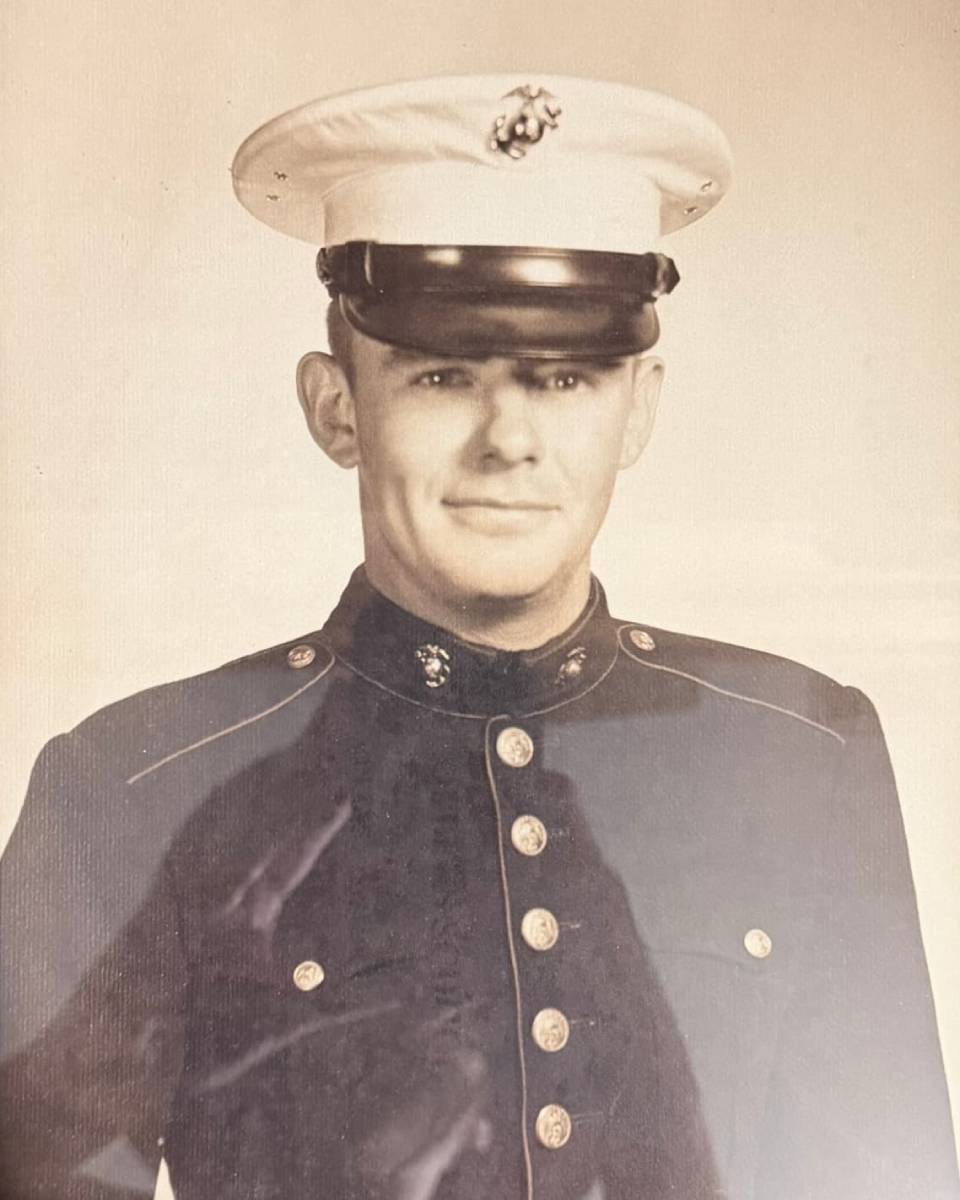
U.S. Marine Corps · Corporal
Korean War Era
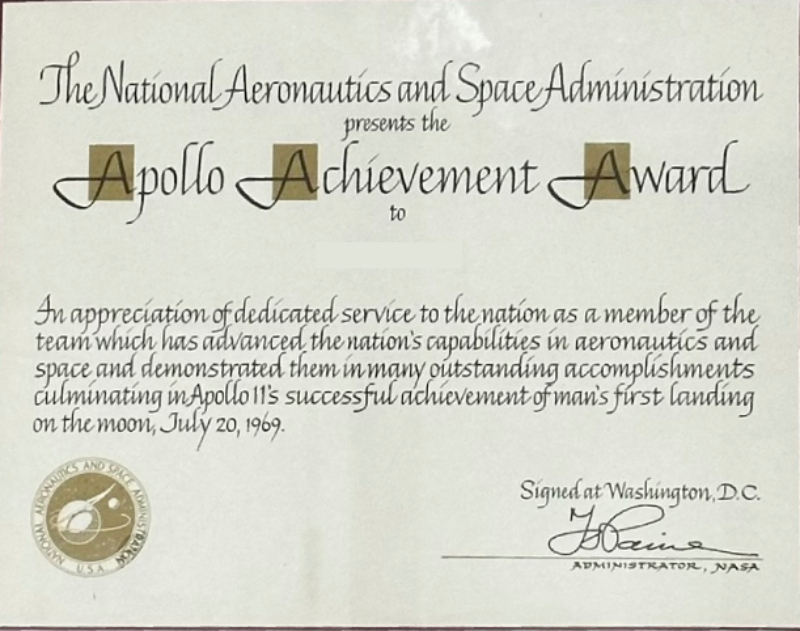
Apollo Achievement Award
Moon Landing · July 20, 1969
U.S. Marine Corps · Corporal
Korean War Era
Apollo Achievement Award
Moon Landing · July 20, 1969
Today, the walls of my home are lined with official 1960s and 70s NASA documentation and photographs from his time at the rocket factory in New Orleans. They aren't decoration. They're reminders of what it means to build something and be a part of something that matters.
02 — My Parents
Standards & Systems Thinking
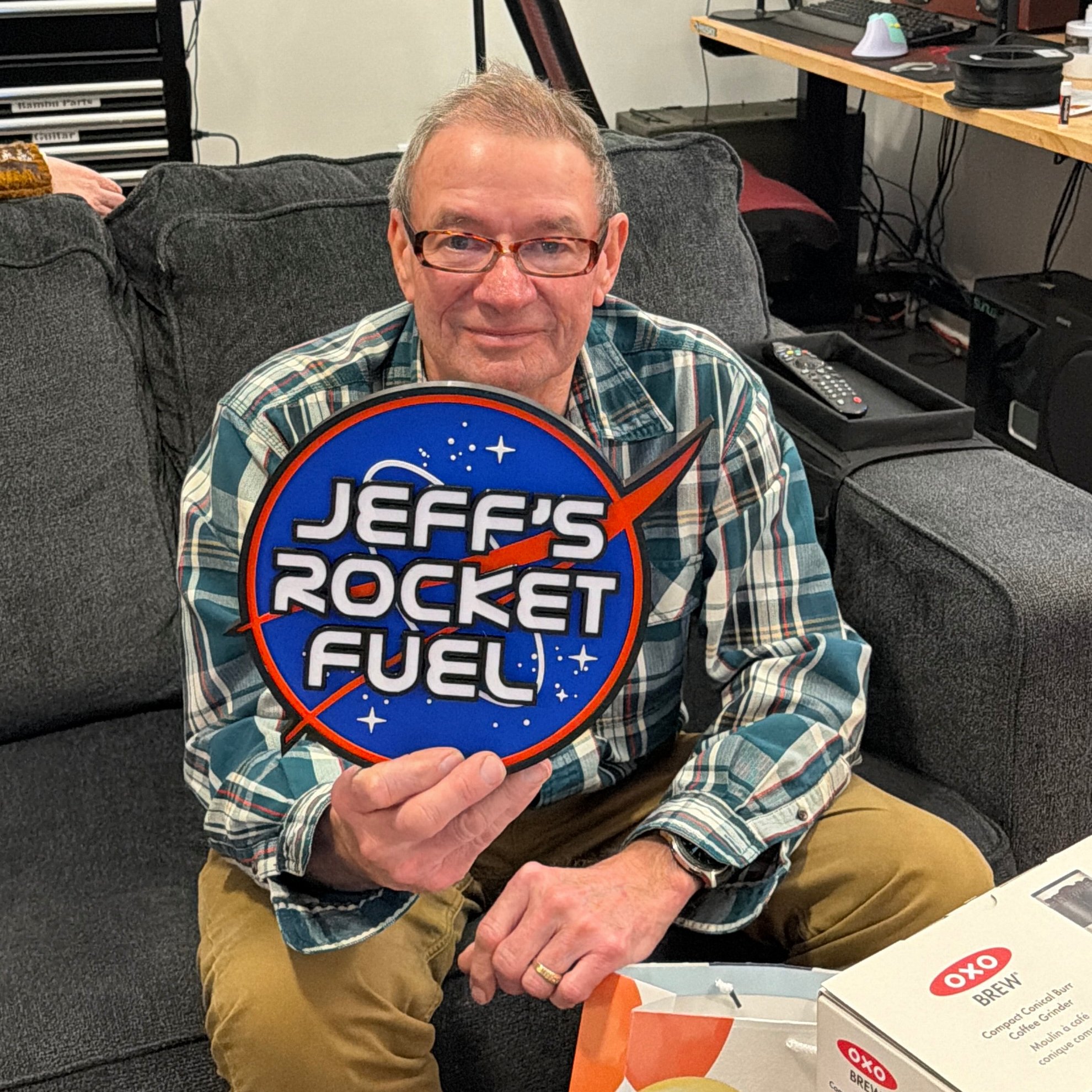
Jeff's Rocket Fuel Sign — for Dad
Now above the coffee station at home
My father taught me what responsibility looks like by living it every day. He was up before dawn—his alarm cutting through the house at 4:30 a.m.—and home late, working long hours almost my entire childhood without complaint.
In the evenings he might sit on the couch with a bowl of ice cream with a Detroit sports game on, but more often he was fixing something: a car, the house, a neighbor's problem.
Being around him while he worked felt grounding. Things were getting done. Even when he was frustrated—swearing at stubborn bolts or broken parts—he never took it out on people. I learned early to be patient and persistent, and to push through problems rather than walk away from them.
His tools lived in the basement and the garage, many of them passed down from both grandfathers and still in use decades later. Along one basement wall sat shelves of thick automotive repair manuals, covering every system on every car we owned. Along another wall was his handmade workbench and toolbox. He encouraged us to use everything, even if it meant lost 10mm sockets or damaged tools.
There wasn't a job he wasn't willing to try himself or teach us how to do. He praised our work easily and sincerely, a grin spreading across his face as he retold stories of our repairs and creations to anyone who would listen.
When something went wrong, he didn't lecture or explain theory. He kept trying. Persistence was demonstrated, not announced. He invited me to help, handed me the wrench, let me make mistakes in a space where failure wasn't punished—only corrected.
He took sixteen years to finish school while raising a family, then spent forty years at General Motors Technical Center, starting as a janitor at eighteen and working his way up to a wood model maker in the G.M. Design Studio.
His standards were uncompromising. Shortcuts weren't interesting. "Good enough" wasn't finished. He handled stress the same way he handled everything else—quietly, through action. Strength through him looked like work.
I didn't realize how much I absorbed from watching him until much later—how standards are transmitted without words, how example outpaces instruction. How children really are sponges, not for what they're told, but for what they live around.
My mother brought a different kind of precision into our household—less about tools and materials, more about systems, order, and verification.
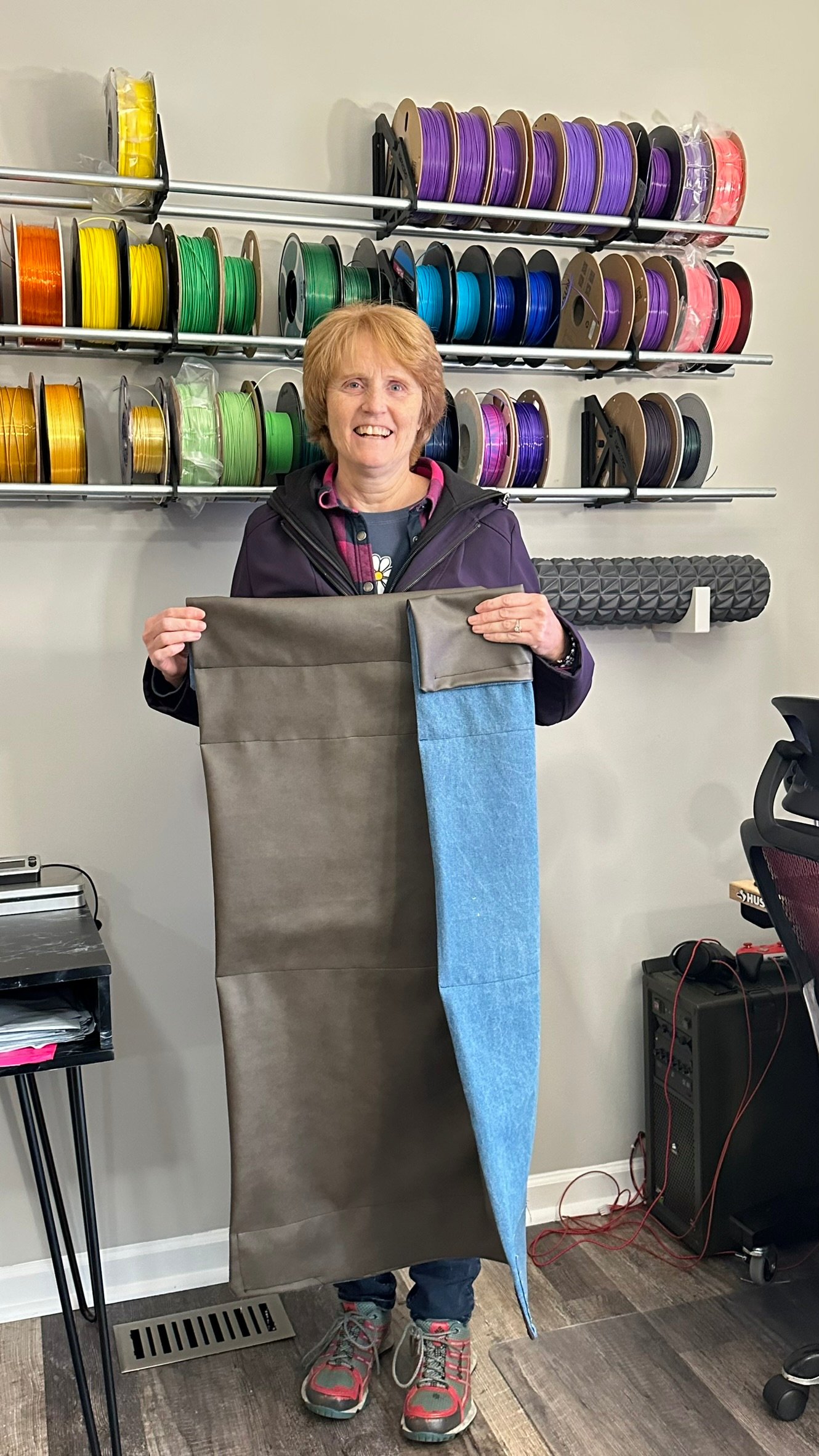
Mom's hand sewn magnetic vinyl and denim panels. Enables year round printing in my garage, by keeping drafts away from printers.
She worked as an addiction and mental health nurse, a role that demanded vigilance, pattern recognition, and accountability. Small details mattered because they signaled larger problems. Nothing was assumed to be fine without being checked.
At home, that discipline was unmistakable. When we cleaned, we didn't just mop the floor—we cleaned every baseboard by hand. Grout was scrubbed. Corners were inspected. She would look over my shoulder, test for dust, and send me back if something was missed. It was her way or the highway.
At the time, it felt excessive. Later, I understood it wasn't about cleanliness—it was about standards. Work wasn't done when it looked done. It was done when it held up under inspection.
She taught me how to notice what others overlook, how to slow down and verify, how to finish things correctly even when no one else would ever see the difference. That insistence on correctness—on doing it right, not just doing it fast—shaped my internal bar as much as any workshop ever did.
Where my father showed me how to work hard with my hands, my mother taught me how to work hard with my mind—planning, organizing, checking, and holding systems together. The same uncompromising standard ran through her that I later recognized in my grandfather: clarity, order, and no tolerance for shortcuts.
This combination of systems thinking, hands-on craft, and teaching is not abstract to me. It shapes how I design, how I print, how I document, and how I deliver work. Standards weren't taught to me as rules—they were modeled as defaults. That inheritance is what I bring into every project.
Disclaimer
References to Pontiac Motor Company and its vehicles are historical and familial. Pontiac Printing Press is not affiliated with or endorsed by General Motors or the Pontiac Motor Company brand.